New York Takeaways: Realtime Ethereum and Institutional Blockspace
ETHGas just returned from a packed week in New York, where the Realtime Ethereum thesis moved through some of the most important rooms in crypto, finance, and Ethereum infrastructure.
Across Agentic Finance Summit, Vault Summit NYC, our Institutional Blockspace event with Bitmine, and ETHConf, the same question kept coming up:
What does Ethereum need to support the next phase of onchain finance?
The answer is not only more scale. It is more certainty.
Agents, vaults, institutions, and builders need infrastructure that makes Ethereum faster, more predictable, and easier to use without compromising the decentralization and neutrality that make Ethereum matter in the first place.
Agentic Finance Summit
At Agentic Finance Summit, Kevin focused on what agentic finance needs from Ethereum: machine-speed execution, accuracy, and stronger coordination between autonomous systems.
Agents do not just need wallets. They need confidence that transactions will land when expected. They need execution environments where economic intent does not sit exposed inside a long settlement window.
Today, Ethereum is still a slow and uncertain execution environment. For agents, that uncertainty becomes more than a UX issue. Multi-agent coordination gets harder, transaction timing matters more, and autonomous systems become ideal MEV targets.
For ETHGas, the path forward starts with blockspace. By making blockspace more programmable, tradable, and predictable, ETHGas creates a path toward realtime preconfirmations and stronger execution certainty for agentic systems.
Agentic finance needs Ethereum to move closer to machine speed. ETHGas is building the blockspace market that can make that possible.
Vault Summit NYC
At Vault Summit NYC, Kevin brought the ETHGas thesis to a room focused on vaults, institutional yield, custody, and risk-managed onchain strategies.
The message was direct: the vaults of tomorrow need more yield with less risk.
That starts with recognizing that execution quality is part of performance. For vaults, market makers, lending protocols, and onchain strategies, blockspace is not just a technical detail in the background. It affects yield, risk, and user outcomes.
Vaults can be front-run when they rebalance. Lending protocols can incur losses when liquidations take too long to settle. MEV can pull value away from protocols and users. And in a world where basic ETH APRs can feel increasingly compressed, new sources of performance matter.
ETHGas turns blockspace into standardized, tradable products so the ecosystem can improve execution certainty and unlock new forms of yield. Realtime preconfirmations compress the uncertainty window, improve execution quality, and reduce the risk that value leaks out between intent and settlement.
For vaults, that is the promise: higher yield, lower risk, and a more predictable Ethereum execution environment.
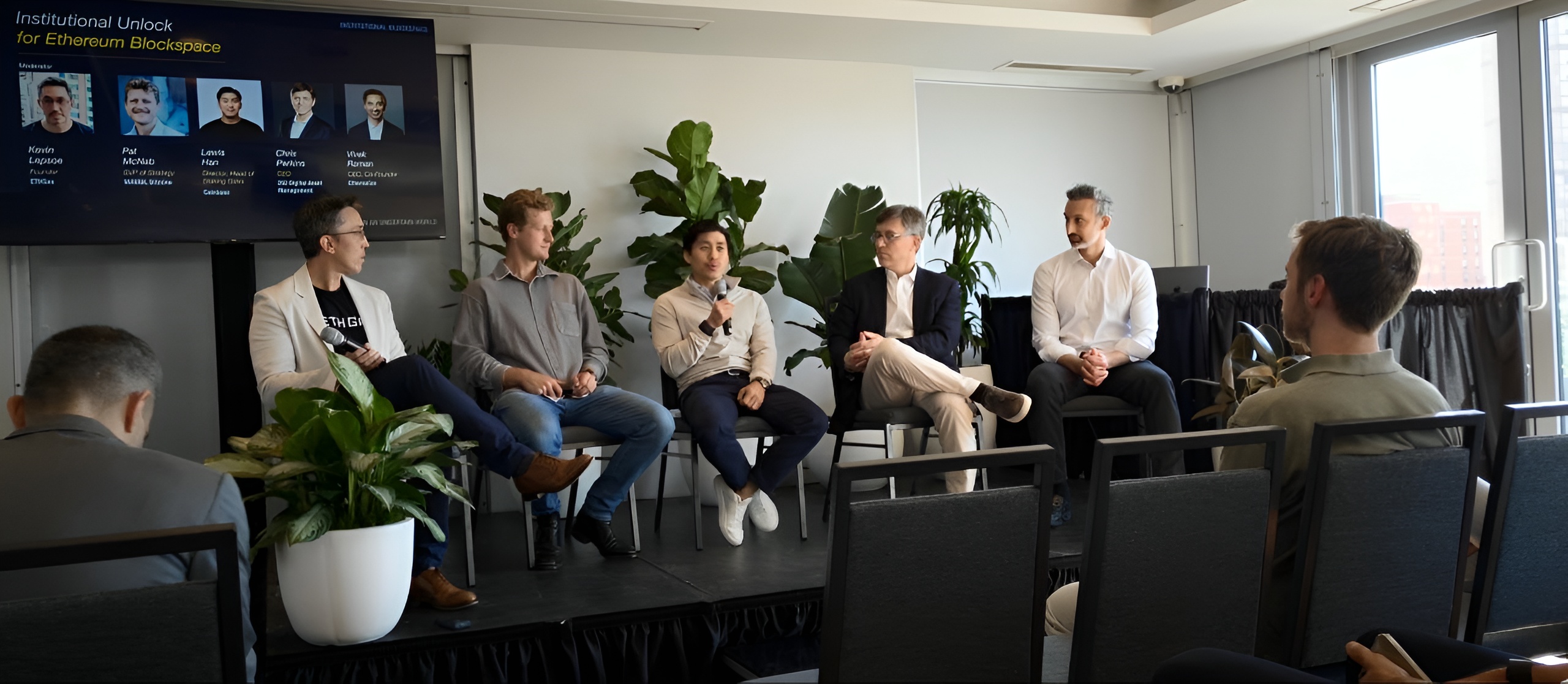
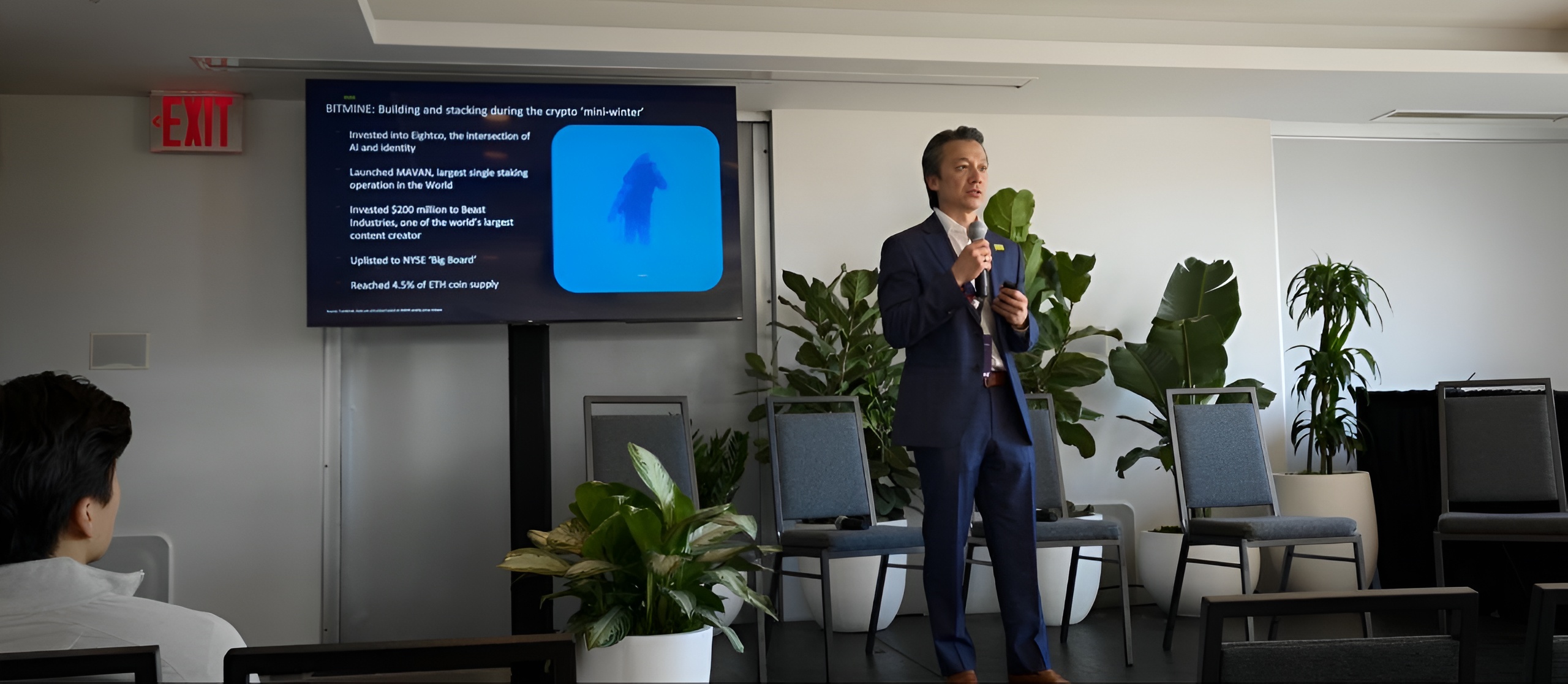
Institutional Blockspace with Bitmine
ETHGas and Bitmine convened a curated group of builders, investors, and Ethereum infrastructure leaders for Institutional Blockspace: Predictability in an Uncertain World.
The event centered on a simple premise: Ethereum is one of the most significant infrastructure opportunities in digital assets, but institutional access still needs clearer pathways built for speed, fairness, compliance, and scale.
The conversation repeatedly came back to what institutions actually value: decentralization, fiduciary responsibility, security, privacy, and infrastructure they can trust without asking Ethereum to become something it is not.
The institutional path forward is not to regulate away the technological advances or compromise the network’s core properties. It is to build better access frameworks around the users, operators, and counterparties that need to meet institutional standards.
Kevin also discussed validator support and the importance of bringing high-quality operators into the ETHGas ecosystem. The broader takeaway from the room was clear: anything that grows Ethereum’s pie without undermining its core properties is worth serious attention.
That is the role Institutional Blockspace is meant to play.
One Ethereum. Multiple lanes. More predictable access for the capital that needs it.

ETHConf
The week closed at ETHConf, where Kevin brought the New York thesis back to the base layer:
Is Ethereum Realtime Ready?
The talk connected the week’s themes to the technical and economic foundation underneath them: blockspace.
Ethereum sells blockspace: the execution capacity, ordering, storage, and settlement surface that every onchain application depends on. But the current 12-second block structure creates uncertainty for the next generation of onchain systems.
On stage, Kevin returned to a simple challenge for Ethereum’s next chapter: more speed, more certainty, and a stronger execution environment for the applications already moving onchain.
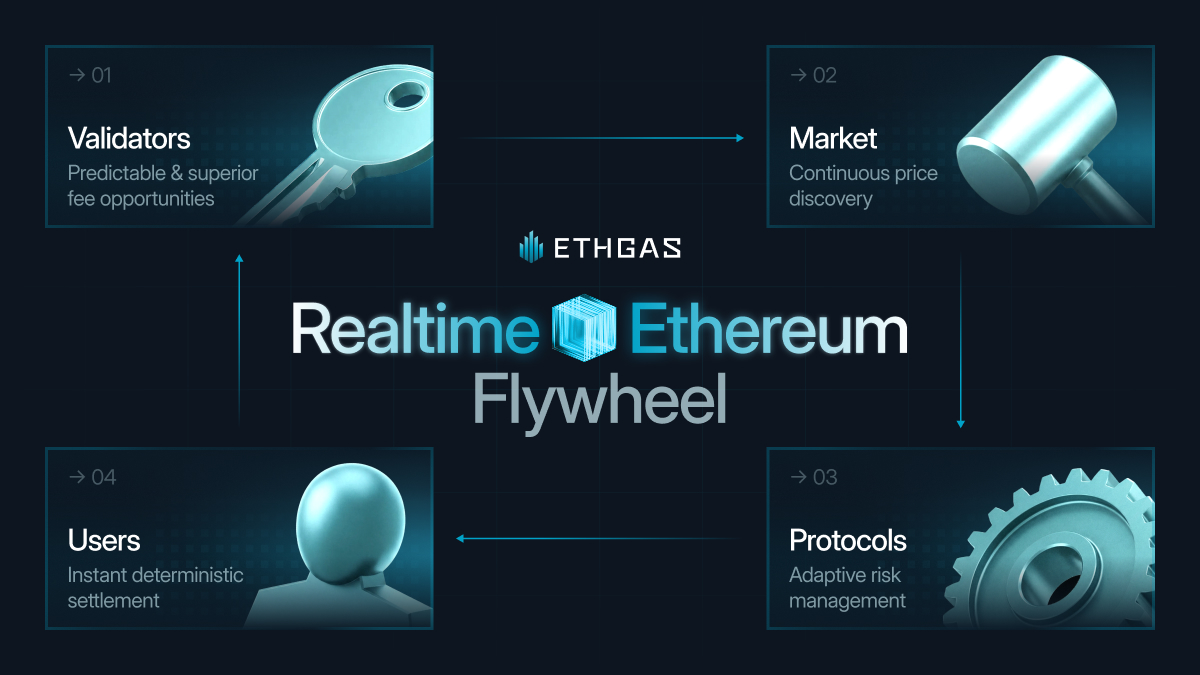
ETHGas approaches that by breaking the 12-second block into realtime execution windows and broadcasting Ethereum state more frequently. Instead of waiting for the full block to settle before users, protocols, agents, and vaults can understand what happened, Realtime Ethereum creates a path toward faster confirmations and stronger execution certainty.
For DeFi, that changes the shape of risk. Lending protocols inherit timing risk when liquidations take seconds to settle. Vaults inherit performance risk when rebalances can be manipulated. Traders inherit execution risk when MEV sits inside the gap between intent and settlement.
Realtime preconfirmations compress that window.
The result is not just faster UX. It is a more reliable execution environment for the financial applications Ethereum is already attracting.
What New York Added Up To
New York showed that the ETHGas thesis is landing across multiple audiences at once.
Agentic finance needs machine-speed execution.
Vault infrastructure needs higher yield with lower risk.
Institutions need auditable, predictable access.
Ethereum builders need a faster and more certain base layer experience.
Those are not separate conversations. They are different expressions of the same infrastructure problem. Ethereum has already won the settlement and liquidity conversation. The next chapter is about making that settlement layer realtime, predictable, and usable enough for the capital, software, and institutions now arriving onchain.
ETHGas is building for that chapter.
The ticker is $ETH. Are you Realtime Ready?